McLaren one-off X1 surfaces at Pebble Beach
The Pebble Beach Concours at Monterey is used to seeing the weird and wonderful creations of bespoke vehicle design and craftsmanship, but one of the most surprising entrants this year was from the McLaren Special Operations team.
Designing ‘i’ Into the BMW Brand
When you create a new branch of the family tree, the deign of the vehicles should show independence, yet still be familial. That was the task BMW’s design team was given with the new ‘I’ sub-brand.
Toyota sporty FT-86 II concept
Perhaps fearing that the brand is losing touch with passionate drivers, Toyota is developing a new affordable sports car to fill the gap it left when it dropped the Supra and MR2 from its lineup.
Showing posts with label Cars. Show all posts
Tuesday, September 4, 2012
Rolls-Royce celebrates Charles Stewart Rolls
We’re used to “special editions” from auto manufacturers trying to lift sales with a lick of paint and some fancy decals, but when Rolls-Royce does a special edition it’s a much more cerebral and artisanal endeavor as befits the mindset of its customers. The Phantom Coupe Aviator recently shown at Pebble Beach is a subtle but rather lovely limited edition inspired by the Rolls-Royce engined Supermarine aircraft of the 1930s; a precursor to the iconic Spitfire and from a time when cars and aircraft engines were actually made by the same company.
"Our founding forefather Charles Stewart Rolls was a pioneer who pushed the boundaries of motoring and aviation to the limit," said Torsten Müller-Ötvös, Rolls-Royce CEO. "With our exclusive Phantom Coupé Aviator Collection we celebrate this great British hero, presenting a car which hints at experiments in early flight married to the best engineering, modern design and exquisitely crafted materials.”
The only exterior clue is the striking grey metallic paint which is given a contrasting matte finish on the hood, windshield surround and grill surround. The interior however is a riot of detailing – it includes a hand-crafted mahogany lower dash with Sapele contrasts underneath a matte grey stainless steel fascia with custom matte black dials, and an aviation standard mechanical clock.
The transmission tunnel cover is in anodized aluminum with exposed torx fixings and swage lines that echo the oil cooling veins on the Supermarine fuselage side. These highlights are repeated on collection car armrests. The tunnel incorporates two extraordinary polished aluminum cup holders that look like they should be in a jewelery shop.
The leather-lined glove compartment includes an embossed Charles Rolls quote following his first flight with the Wright Brothers in 1908: "The power of flight is as a fresh gift from the Creator, the greatest treasure yet given to man." Deep. A center console chrome plaque describes Rolls – only the second man in Britain to hold a pilot's license – simply as Pioneer Aviator, below a representation of his signature. The floor mats are in leather with machined aluminum protective bullet rods.
All very tasteful, and the marketing narrative just about holds together. Only 35 examples will be made, so get your order in quick. Price? Don’t be silly; get your people to talk to their people.
Thursday, September 22, 2011
UK's hydrogen refueling station opens
If you live in Britain and are debating whether or not you should purchase a hydrogen-powered Honda FCX Clarity, well ... your decision may now be a bit easier to make. In order to encourage development of fuel cell vehicles such as the FCX, Honda has just opened the UK's first open access station for hydrogen-powered vehicles. It's located on the grounds of Honda of the UK Manufacturing in Swindon, and everyone who needs a little hydrogen in their lives is welcome.
The commercial-scale station can fill vehicles at either 350 or 700 bar, which are the two standard pressures used by major vehicle manufacturers. Filling up an FCX is said to take less than five minutes, and due to the fact that the station uses multiple hydrogen cylinders, cars can fill up immediately after one another - at stations with less cylinders, users might have to wait for more hydrogen to be generated.
Situated along the M4 motorway, the station is approximately half way between London and Swansea. It is hoped that it will serve as a model for other hydrogen filling stations to be built in the UK, that will provide the infrastructure necessary for the wide use of hydrogen-powered vehicles. BOC, the industrial gas company that partially funded the project, has already established similar stations at over 70 locations around the world.
Honda is also developing a Home Energy Station, so FCX owners can refuel without always having to hunt down commercial hydrogen stations.
Wednesday, September 21, 2011
2009 Prius: Fast or Not
A third generation of the Toyota Prius gas-electric hybrid car has been eagerly anticipated. Though Toyota has not officially announced when the redesigned Prius would appear, unofficially, automotive journalists had been tipped to expect it sometime in 2008, as a 2009 model.
However, news reports from Japan last week said the car has been delayed by at least six months, to early 2009.
A Toyota spokesman said the company would not comment. The reason? Because no official launch date had ever been confirmed, there was no way to officially confirm a delay.
Nikkan Kogyo Shimbun, a Japanese industrial publication, reported last Friday that the delay was caused by snags in developing new batteries for the electric system. The next Prius was expected to use new lithium-ion batteries. Currently, the Prius uses nickel metal hydride batteries, which take up more space and aren’t as efficient.
Whether the delay is real or not, it appears that the battery problems are plenty real. Previously, Toyota set a goal of reducing the size of the battery pack in the next Prius by 50 percent, while also increasing its efficiency.
The delay is apparently to give Toyota engineers time to retro-fit the new Prius design with the old-style nickel metal hydride batteries they’d hoped to be rid of. At least initially, the new Prius will still have nickel metal hydride batteries, Nikkan Kogyo reported. Lithium ion power is not ready for prime time (remember all the exploding laptop batteries made of the same substance?). Lithium ion gets unstable under extreme pressure – apparently too unstable for automotive use at this stage of its development.
The apparent failure of Toyota, and its development partners, to come up with a viable next generation battery pack is a serious setback. Will its competitors use this to try to seize a competitive advantage? Calling Chevrolet: Where is the Volt?
Infiniti M Hybrid equals Lamborghini Countach
Records may come and go but, aside from grabbing headlines, they're a way of benchmarking the progress of new technologies. In the automotive world this means hybrid drivetrains and we've seen a number of new record attempts in recent times - usually related to fuel economy as with the Kia Optima Drive. The latest comes from Nissan, whose Infiniti luxury division is claiming the world's fastest accelerating full hybrid vehicle in the form of the Infiniti M Hybrid. The M Hybrid has covered the standing quarter mile (400 m) in an average time of 13.9031 seconds - putting it on par with a 1982 Lamborghini Countach.
The record came in a standard production model Infiniti M35h Hybrid, which Nissan points out already holds the 0-100 km/h (62 mph) record of 5.5 seconds. The record attempt was overseen by an adjudicator from Guinness World Records at the UK's Santa Pod Raceway with journalist Tim Pollard at the wheel. The vehicle is powered by a V6 ICE complemented by a 67-horsepower (50 kW) electric motor that combine for a total system power output of 360 horsepower, which is delivered to the rear wheel in a two-clutch system. Nissan says this configuration maximizes both performance and efficiency, while allowing the car to run in electric-only mode at speeds of up to 100 km/h (62 mph).
The 13.9031-second record, which was an average of all runs, included a run of 13.8960 seconds and puts the Infiniti M on a par with the likes of the 1982 Lamborghini Countach (13.9 seconds), the 1998 BMW M3 (13.8 seconds), and 2007 Aston Martin V8 Vantage Volante and 2007 Porsche 911 Carrera (both 13.6 seconds).
"The Infiniti M35h proves that hybrids can be fast as well as frugal," said Tim Pollard, who is the associate editor of the UK's CAR Magazine. "At Santa Pod you could feel the instant torque of the electric motor away from standstill - the car just leapt off the line. I did try changing gears manually, but it was fastest left in automatic. That was when we achieved the fastest single run of 13.8960 seconds."
New Jensen Interceptor
With more comebacks than Dame Nellie Melba, the Jensen Interceptor must surely be the most revived name in automotive history. It was first used between 1950-57 for a 4.0 liter convertible based on Austin componentry, then rose to international awareness with its second coming as the dream car of the sixties when in 1966 it was released as a Grand Tourer designed by Italian design house Carrozzeria Touring.
The Jensen Interceptor of this period was a genuine supercar, running huge Chrysler V8s with first 6276 cc and later 7212 cc. In 1967, the FF variant had four-wheel drive, anti-lock brakes and traction control, technological forerunners of the active safety features which are still not yet commonplace.
The Interceptor III arrived in 1971 and enjoyed excellent sales before the marque was shelved in 1976.
In the Automotive business though, a great name never dies, and the Interceptor reappeared in 1984 as the Mk IV before production ceased once more in 1991.
Over the last few years the Jensen name has been revived once more, with Oxfordshire-based JIA rebuilding original Interceptors using a 429 bhp General Motors LS3 V8 engine and a range of other modern components to create the Interceptor R. There's even a 600 bhp supercharged version which will no doubt have already surprised a few people on the motorway.
JIA has shown that there is a market for an expensive, hand-built Grand Tourer based on the iconic Interceptor and now the revival appears ready to finally move past the 45 year-old Interceptor design to full blown production of the next generation.
The next generation of Jensen Interceptor will be built in Great Britain and will cost in the vicinity of US$200,000 when it hits showrooms in 2014.
An all-new Jensen Interceptor will be engineered, developed and built by CPP Global Holdings, though ownership will remain with Healey Sports Cars Switzerland Ltd (HSCS) which owns all assets, intellectual property, designs, and brand rights for the Jensen and Interceptor brands.
The new Jensen Interceptor will be a four-seat grand tourer with an all-new aluminum chassis and handcrafted aluminum body. The public unveiling of the Interceptor is planned for late 2012, with deliveries to customers beginning in 2014.
Annual production numbers and pricing are yet to be confirmed, but will be fixed to ensure ultra-exclusivity.
Tuesday, September 6, 2011
World’s Fastest Cars 2011
While most of us can only dream of having the fastest car in the world, some will do anything to have such speed and force. What speed are the fastest cars in the world? The 10 fastest cars available in the market to measure speed.
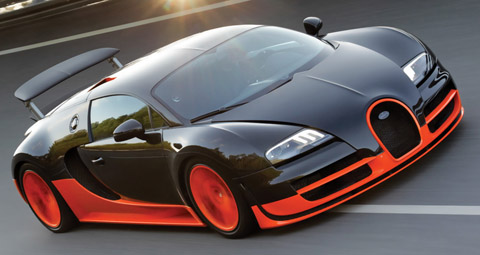
1. Bugatti Veyron:
267 km / h, 00-60 and 2.5 seconds. Aluminum, narrow 8-liter W16 engine with 1200 horsepower, the base price is $ 1,700,000. Tested again 10 July 2010, the new 2010 version of the Super Sport, Bugatti Veyron, once again redeemed by the title of world’s fastest car 267 mph.
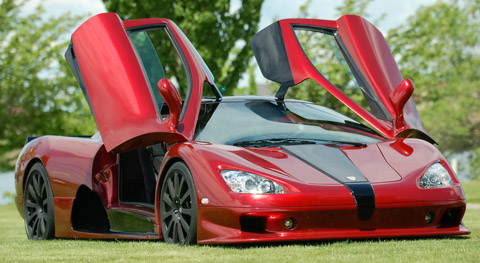
2. SSC Ultimate Aero:
257 mph, 0-60 in 2.7 sec. Twin-Turbo V8 Engine with 1183 hp, base price is $ 654.400. Reviewed March 2007 Guinness World Records, was the SSC Ultimate Aero, the fastest car in the world from March 2007 to July 2010 and until recently fallen behind the Bugatti Veyron to take the No. 2 position.
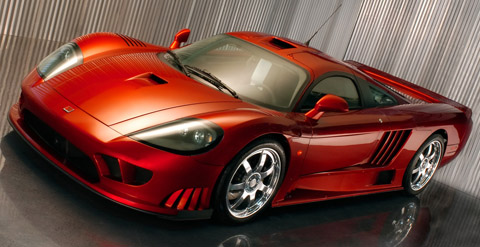
3. Saleen S7 Twin-Turbo:
248 mph, 0-60 in 3.2 seconds. Twin Turbo V8 aluminum engine with 750 hp All, base price is $ 555 000. Smooth and bad ass, I want to show non-stop.
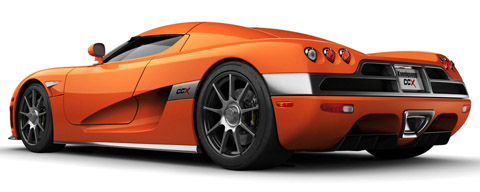
4. Koenigsegg CCX:
245 mph, 0-60 in 3.2 sec. At 90 degrees V8 806 hp base price is $ 545.568. In Sweden, it is difficult to be objective the fastest car in the world but it has a long way to go beyond Bugatti and Ultimate Aero.
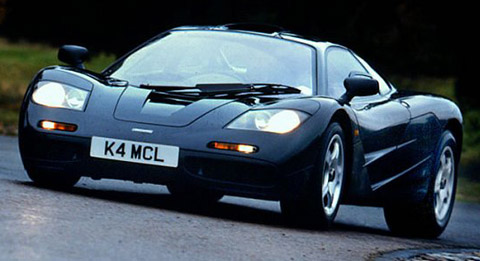
5. McLaren F1:
240 mph, 0-60 in 3.2 sec. BMW S70 / 2 60 degree V12 engine with 627 hp, base price is $ 970,000. Check the doors, they looks like bat wings, maybe Batman need to order one and paint it black.
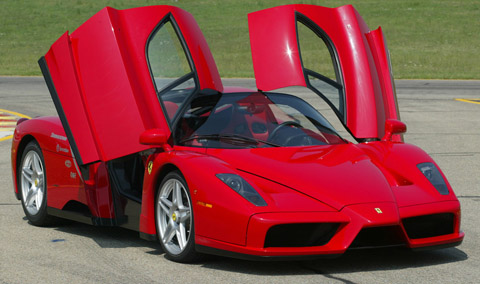
6. Ferrari Enzo:
217 mph, 0-60 in 3.4 sec. F140 Aluminum V12 Engine with 660 hp, base price is $ 670,000. Only 399 ever produced, the price increases every time someone crashes.crashes.
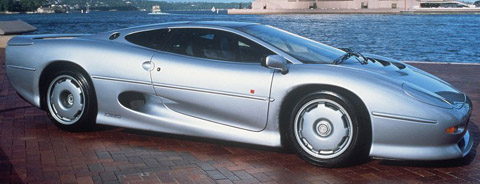
7. Jaguar XJ220:
217 mph, 0-60 in 3.8 seconds. Twin Turbo V6 with 542 horsepower base price was $ 650,000. Made in 1992, this car is all that is needed to make the list.
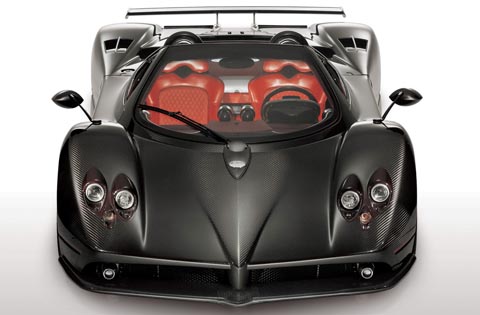
8. Pagani Zonda F:
215 mph, 0-60 in 3.5 seconds. Mercedes Benz M180 V12 650 hp prices, the base is $ 667 321. With a V12 motor, this baby can do much better.
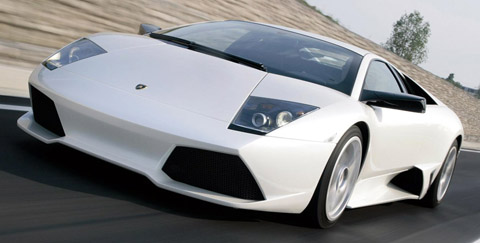
9. Lamborghini Murcielago LP640:
211 mph, 0-60 in 3.3 seconds. V12 with 640 horsepower base price is $ 430 000. nice piece of art, design is very round and smooth.
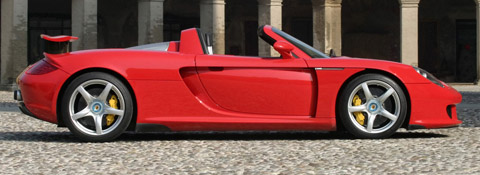
10. Porsche Carrera GT:
205 mph, 0-60 in 3.9 seconds. Aluminum, 68 degrees, the water-cooled V10 engine with 612 hp prices, the basis is $ 440,000. The most powerful and most expensive Porsche has almost made the list as # 10.
5:15 AM
MUSIC VIDEOS & STUFF